Mastering AI Competitive Intelligence: A Step-by-Step Guide
Cut audits by 90% with competitive intelligence and lead the 2026 market with high-performance web development.
Georgiana Nutas

Are you still spending hours manually scrolling through your competitors' websites or logging price changes into a cluttered Excel file, hoping you haven't missed a critical shift?. Perhaps you’ve already felt the sting of missing a major product launch because your "active monitoring" was simply a tab left open in a browser. In the hyper-accelerated market of 2026, failing to adopt AI Competitive Intelligence is no longer just "old school", it is a strategic failure that leaves you operating in a "pre-AI" vacuum.
Today, the winners aren't just watching their rivals; they are using autonomous systems to analyze the competition for them, gaining a permanent head start in strategic positioning.
The Data-Driven Shift: Why 2026 is Different
The transition from human-led research to AI-orchestrated intelligence isn't a trend; it's a fundamental shift in business survival. The statistics for 2024-2026 tell a clear story:
- Market Adoption: 73% of companies have now integrated AI into their competitive intelligence workflows.
- Opportunity Detection: These companies are identifying market gaps and opportunities that were previously invisible to human researchers.
- The Velocity Gap: The time required for a comprehensive competitive audit has plummeted from an average of 3 weeks down to just 48 hours.
- The ROI of Speed: Firms using AI-driven audits reduce their time-to-market by 40% and gain an average of 20% more market share over a two-year period.
Source: Gartner 2024 Study on AI Adoption in Business.
4 Pillars of AI-Powered Competitive Audits
AI in competitive intelligence isn't about robots taking jobs; it’s about creating an "ultra-assistant" that scales your brainpower.
1. Real-Time Algorithmic Price Monitoring
AI agents now automatically scrape competitor websites. They don't just "look" at prices, they track fluctuations across regions, currencies, and customer segments. You no longer need to check 50 product pages every Monday morning. Instead, you receive an alert the moment a price drops or rises, allowing you to adjust your margins instantly.
2. NLP Sentiment Analysis: Finding the Flaws
Using Natural Language Processing (NLP), AI scrolls through thousands of customer reviews left on your competitors’ forums and social channels. It identifies exactly what customers hate about your rival's latest update. This allows you to detect market "cracks" and position your own product as the perfect solution.
3. Marketing Trend Detection
AI monitors your competitors' ad spend and social media performance. It identifies which ad formats are "exploding" and which campaigns are being quietly killed. This allows you to bypass the "trial and error" phase and go straight to creative formats that have already been proven in the market.
4. Predictive Strategy Anticipation
Advanced AI models can now detect "weak signals", subtle changes in a competitor’s website code, recruitment of specific talent, or a shift in their commercial discourse. This allows you to anticipate a pivot or a product launch weeks before it officially happens.
The Implementation Gap: Custom Architecture & Rapid Deployment
While off-the-shelf AI tools exist, they often fail to handle the complex, real-time demands of an enterprise-level audit. High-speed scraping and data processing require a robust backbone.
This is where the distinction between "using a tool" and "building a strategy" lies:
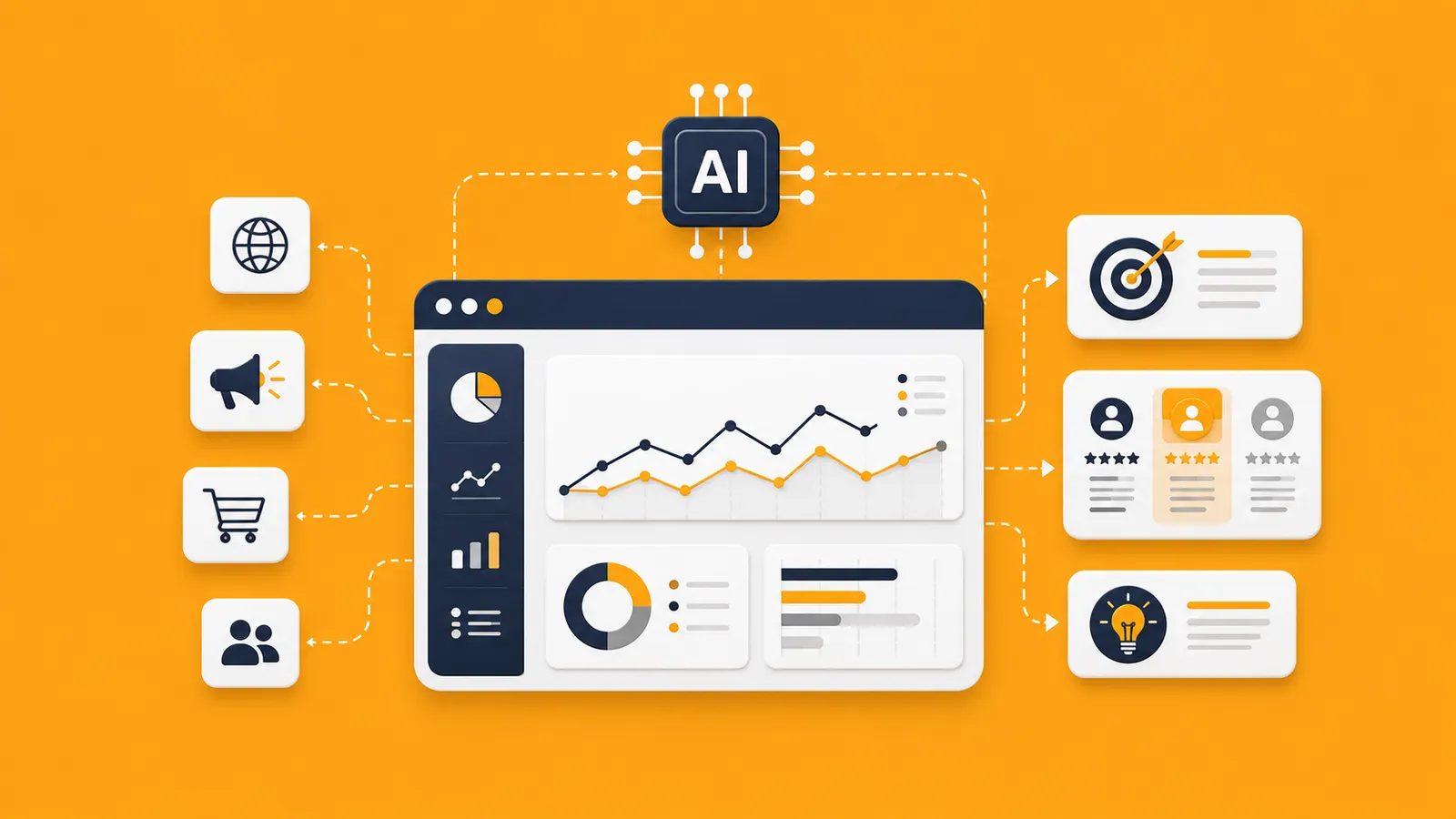
- The Engine: High-performance custom web development is the only way to ensure your data pipelines are secure, fast, and capable of handling thousands of concurrent AI queries. At BluDeskSoft, we specialize in building custom architectures that turn these "AI alerts" into actionable business dashboards.
- The Response: Once the AI identifies an opportunity, speed of execution is everything. You need to be able to communicate with your target audience immediately. This is where tools like Lint Page are revolutionary. When your AI audit reveals a competitor's weakness, you can deploy a hyper-targeted, high-conversion landing page via Lint Page in minutes, capturing the market gap before your competition even realizes they’ve been exposed.
A SaaS Success Story: Action vs. Reaction
Consider a Marketing Manager in a competitive SaaS niche.
- The Old Way: Their #1 rival launches a new feature. They found out two weeks later because they happened to read a newsletter. By then, the rival has already captured the "early adopter" buzz.
- The AI Way: An automated agent detects a change on the rival's landing page on Day 1. It analyzes social media sentiment and recognizes that this new feature addresses a pain point your customers have been complaining about for months.
- The Result: You adjust your roadmap immediately. Within hours, you use Lint Page to launch a dedicated "Alternative to X" page that highlights your superior approach, turning your competitor's launch into your lead-generation goldmine.
Strategic Targets: Who Should You Watch?
AI allows you to broaden your scope without increasing your workload. You should monitor three distinct tiers:
- Direct Rivals: To track price shifts and feature parity.
- Market Leaders: To identify trends that will eventually trickle down to your level in 6 months.
- Emerging Startups: AI can identify new disrupters by tracking hiring spikes or unusual social media buzz, giving you a 6-month head start on future competition.
Your 4-Step Roadmap to AI Audit Success
Step 1: Define Your Strategic KPIs
Identify 3 to 5 key indicators that actually impact your revenue: pricing, feature rollouts, or social sentiment.
Step 2: Curate Your AI Stack
- Scrapers: Use smart tools like Octoparse or Import.io to gather raw data.
- Sentiment Analyzers: Leverage NLP platforms like Brandwatch or MonkeyLearn.
- Alert Hubs: Use Meltwater or Mention to centralize your notifications.
Step 3: Configure "Intelligent" Alerts
Don't get notified for every comma change. Set thresholds: "Alert me if a price changes by >10%" or "Alert me if a new product page is indexed".
Step 4: The 30-Minute Weekly Audit
Commit at least 30 minutes a week to analyzing the data provided by your AI agents. Ask yourself: "How does this change our strategy for next week?".
Conclusion: ROI That Speaks for Itself
The shift to AI-driven audits isn't just a technical upgrade; it's an operational necessity. By freeing your team from manual research, you regain hours of creative time and gain a level of reactivity that was previously impossible. You move from making decisions based on "gut feelings" to making them based on hard, real-time data.
Do you believe your business is ready for the speed of 2026?
Written by
Georgiana Nutas
Building modern web applications at BluDeskSoft. We write about what we learn along the way.