 BluDeskSoft
Is Prompt Engineering the Future Skill for Developers in 2025?
The new dev skill? Talking to AI the right way.
Georgiana Nutas
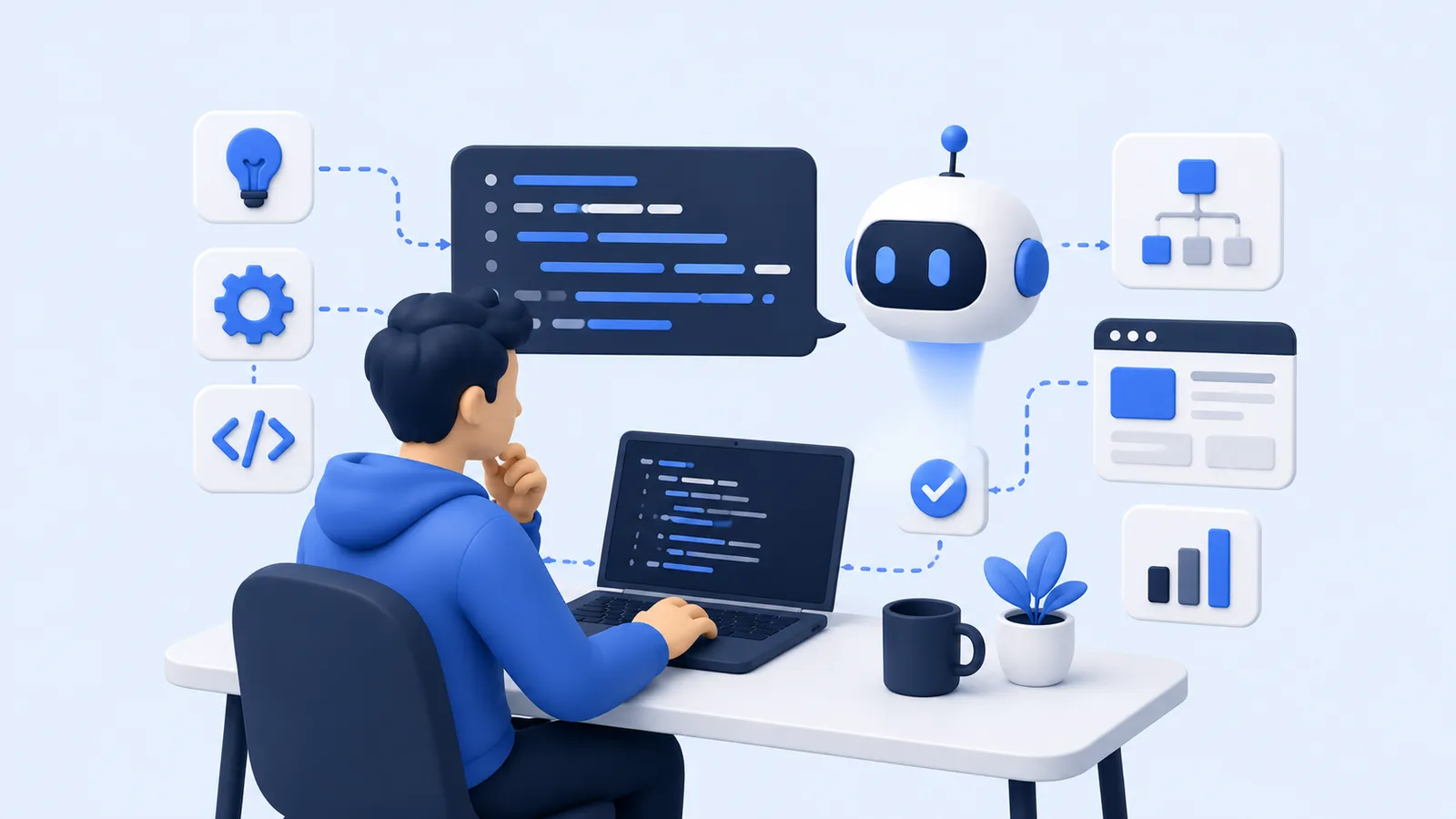
By 2026, Artificial Intelligence has shifted from a "cool feature" to the backbone of the digital workspace. From AI-driven IDEs to automated DevOps pipelines, the way we build software has fundamentally changed. At the heart of this shift lies prompt engineering, a discipline often misunderstood as mere "tips and tricks," but which is actually a sophisticated blend of linguistics, logic, and computational strategy.
What is Prompt Engineering?
Prompt engineering is the process of designing, refining, and optimizing inputs (prompts) to guide Generative AI models (such as GPT-4, Claude 3.5, or Gemini) to produce high-quality, reliable outputs.
Unlike traditional programming, which is deterministic (given input A, the output is always B), prompt engineering is probabilistic. You don’t command the machine; you influence its latent space using structured natural language.
The Difference in Detail: Basic Prompt: "Write a Python script to sort a list." Optimized Prompt: Act as a Senior Backend Engineer. Write a recursive Python function for a QuickSort algorithm. Include docstrings, O(n log n) complexity analysis, error handling for null/empty inputs, and ensure it follows PEP 8 standards. Output only the code block." Why Prompt Engineering is a Strategic Career Move 1. The Era of Hybrid Development Modern coding is no longer 100% manual. With tools like GitHub Copilot and Amazon CodeWhisperer, developers are becoming "orchestrators." Success in this hybrid environment depends on how clearly you can communicate intent to your AI pair programmer. 2. Efficiency and Cost Management AI models aren't magic, they are sensitive to "token" usage and context. Mastery of prompt engineering allows you to: Reduce Hallucinations: Get accurate code the first time. Optimize Tokens: Lower API costs by being concise. Enhance Security: Prevent "prompt injection" and sensitive data leaks. 3. Software Development vs. Prompt Engineering It’s not a replacement; it’s an evolution. FeatureTraditional ProgrammingPrompt EngineeringLogicExact & DeterministicProbabilistic & InfluentialReliabilityHigh (via Unit Tests)Variable (requires validation)Algorithms & SyntaxContext Structuring & Logic
Written by
Georgiana Nutas
Building modern web applications at BluDeskSoft. We write about what we learn along the way.
-1-800x450.webp)
-800x450.webp)